
ezoe.in Blog
The Surprising Health Benefits of Sex for Men and Couples
Published October 20, 2026
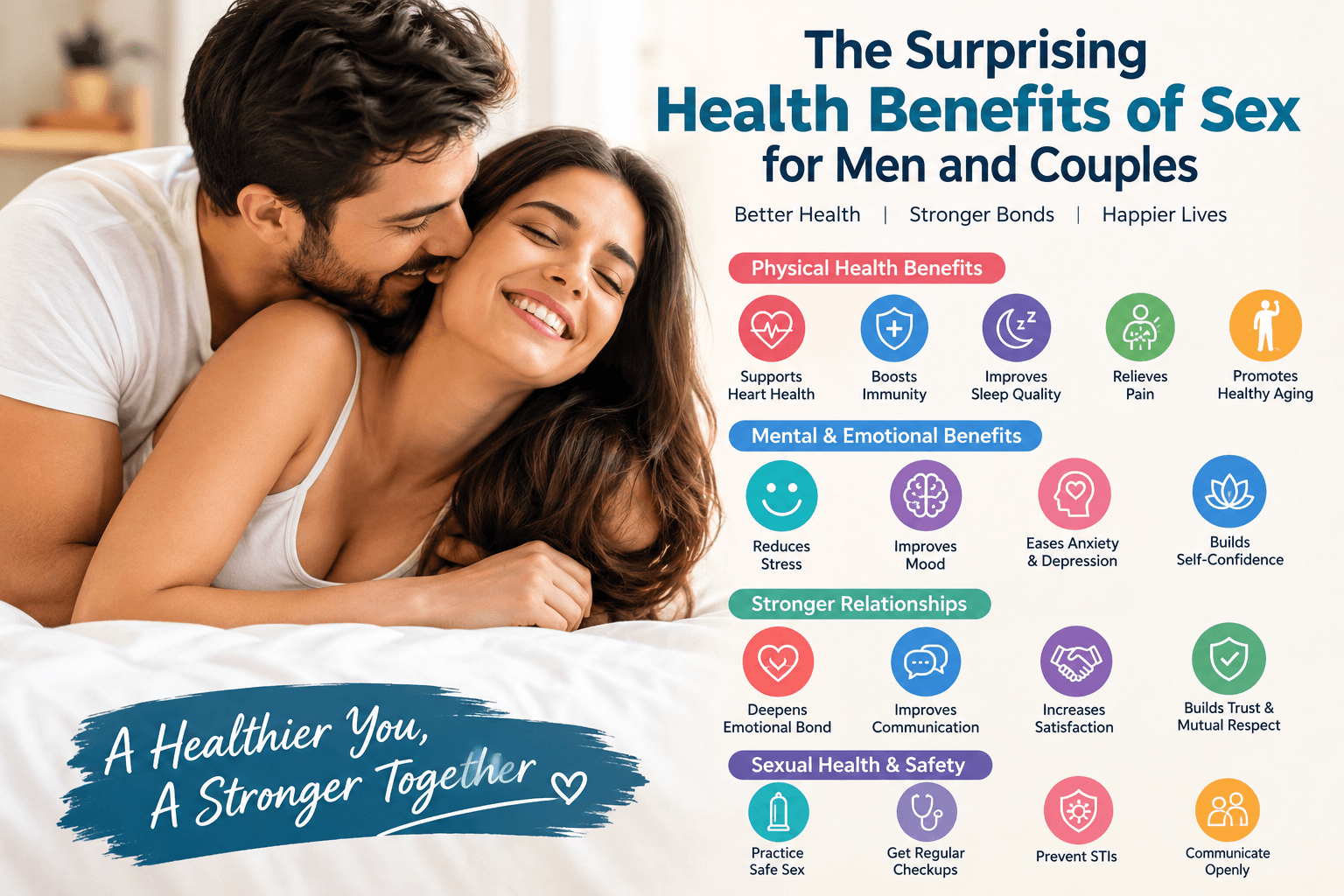

Sexual health is an important part of overall well-being. For many adults, consensual sexual activity can contribute to emotional intimacy, relationship satisfaction, relaxation, and a sense of connection. Although the experience differs from person to person, understanding the potential benefits of sex can help men and couples make informed decisions about their health and relationships.
In this guide, we explore the possible physical, mental, and emotional benefits of sexual intimacy, along with practical tips for maintaining a healthy and safe sex life.
1. Physical Health Benefits of Sex
Sexual activity involves physical movement and changes in heart rate and circulation. For many healthy adults, it can be a form of light-to-moderate physical exertion, although the intensity varies.
Supports Cardiovascular Activity
During sexual activity, heart rate and blood pressure temporarily increase. For people who are medically fit for sexual activity, this can provide a modest amount of physical exertion. However, sex should not be considered a replacement for regular exercise, a balanced diet, or medical care for cardiovascular conditions.
People with unstable heart disease or symptoms such as chest pain should seek medical advice before resuming sexual activity.
May Help Promote Better Sleep
Some people feel relaxed or sleepy after sexual activity, particularly following orgasm. Hormonal changes and relaxation may contribute to this effect. However, the impact on sleep varies, and sex is not a proven treatment for persistent insomnia.
May Temporarily Relieve Certain Types of Pain
Sexual activity and orgasm may provide temporary relief from some types of pain for certain individuals. The response is different for everyone, and sexual activity can worsen pain in some circumstances. Persistent or unexplained pain should be evaluated by a healthcare professional.
2. Mental and Emotional Benefits
Sexual intimacy can be an important source of pleasure, relaxation, and emotional connection when it is wanted and comfortable for everyone involved.
May Reduce Everyday Stress
Consensual intimacy can help some people relax and temporarily shift their attention away from daily pressures. Enjoyable physical contact and emotional closeness may support a sense of calm.
Nevertheless, sex does not eliminate every source of stress, and people should never feel pressured to engage in sexual activity as a way to manage someone else’s emotions.
Supports Emotional Well-Being
Pleasurable sexual experiences may be associated with positive mood and feelings of connection. Hormones and brain chemicals involved in pleasure, reward, and bonding—including oxytocin and dopamine—play roles in these experiences.
Sex is not a substitute for professional treatment for anxiety, depression, or other mental health concerns.
Encourages Body Confidence
For some adults, a respectful and supportive intimate relationship can help them feel accepted and more comfortable expressing their needs. Body confidence also develops through self-acceptance, healthy communication, and supportive relationships, whether or not a person is sexually active.
3. How Sexual Intimacy Can Strengthen Relationships
A satisfying intimate relationship depends on more than sexual frequency. Trust, affection, shared values, emotional support, and communication all play important roles.
Builds Emotional Connection
For couples who enjoy sexual intimacy, physical closeness can be one way to express affection and reinforce their bond. Hugging, kissing, cuddling, and other forms of nonsexual affection can also help partners feel connected.
Improves Communication
Talking openly about preferences, boundaries, comfort, and concerns helps partners understand each other. Honest conversations can make it easier to address differences in desire and avoid misunderstandings.
Keeps Intimacy Mutual and Respectful
Healthy intimacy requires freely given consent. Both partners should feel comfortable saying yes, no, or not now without fear, guilt, or pressure. Consent can be withdrawn at any time.
There is no single correct amount of sex for every couple. What matters most is that both partners feel respected and satisfied with their relationship.
4. Sexual Health and Safety for Men
Taking care of sexual health involves prevention, communication, and seeking medical advice when necessary.
Practice Safer Sex
Condoms, when used correctly and consistently, reduce the risk of many sexually transmitted infections (STIs) and unintended pregnancy. They do not eliminate every risk, and protection needs may vary depending on the type of sexual activity.
Partners can discuss STI testing, contraception, and protection before sexual activity.
Consider Regular Sexual Health Checkups
Many STIs do not cause noticeable symptoms. Testing should be based on factors such as sexual history, new or multiple partners, possible exposure, and medical advice.
Vaccinations, including HPV and hepatitis B vaccines when appropriate, can help prevent certain infections.
Pay Attention to Changes in Sexual Function
Men who experience persistent erectile difficulties, pain during sex, changes in libido, or other concerning symptoms should consult a qualified healthcare professional. These problems can sometimes be associated with diabetes, cardiovascular disease, medication effects, stress, or other health conditions.
Avoid relying on unverified supplements or online medicines that promise instant improvements in sexual performance.
5. Healthy Lifestyle Habits for Better Sexual Wellness
Sexual wellness is closely connected to general health. Several everyday habits can support physical function and overall well-being.
- Exercise regularly: Physical activity supports cardiovascular health and general fitness.
- Eat a balanced diet: Choose a variety of vegetables, fruits, whole grains, and suitable protein sources.
- Prioritize sleep: Consistent, adequate sleep supports energy, mood, and general health.
- Manage stress: Relaxation techniques, enjoyable activities, and professional support can help when stress becomes difficult to manage.
- Avoid smoking: Smoking can damage blood vessels and contribute to erectile difficulties.
- Limit alcohol: Excessive alcohol consumption can affect sexual performance and judgment.
- Communicate openly: Discuss expectations, concerns, and boundaries with your partner.
6. Common Myths About the Benefits of Sex
Myth 1: More Sex Always Means Better Health
Fact: Sexual frequency alone does not determine health. A person’s physical condition, preferences, relationship circumstances, and comfort all matter.
Myth 2: Sex Prevents Heart Disease
Fact: Sexual activity may involve physical exertion, but it is not a proven method of preventing heart disease. Regular exercise, appropriate medical care, and healthy lifestyle habits remain important.
Myth 3: Sex Always Improves Sleep and Mood
Fact: Some people experience relaxation and improved mood after intimacy, while others notice little difference. Individual experiences vary.
Myth 4: Every Man Should Have the Same Level of Sexual Desire
Fact: Libido differs between individuals and can change with age, stress, health, relationships, and medication. There is no universal standard for sexual desire.
7. When Should You Consult a Healthcare Professional?
Consider speaking with a qualified doctor if you experience persistent erectile difficulties, painful intercourse, unusual genital symptoms, concerns about STIs, or a sudden and unexplained change in sexual desire.
Seek urgent medical attention for severe genital pain, a suspected serious injury, or chest pain and breathlessness during sexual activity.
A healthcare professional can assess potential causes and recommend appropriate testing or treatment.
Conclusion
Sexual intimacy can contribute to pleasure, relaxation, emotional closeness, and relationship satisfaction for many adults. Its benefits are not identical for everyone, and sexual activity is only one aspect of a healthy lifestyle.
The foundations of sexual wellness include mutual consent, honest communication, safer-sex practices, regular healthcare when appropriate, and respect for individual preferences. By focusing on these principles, men and couples can make informed choices that support their physical health and emotional well-being.
Frequently Asked Questions
1. What are the potential health benefits of sex for men?
Sexual activity may support pleasure, relaxation, emotional connection, and relationship satisfaction. It can also involve modest physical exertion, depending on the activity.
2. Can sex help reduce stress?
Some people feel more relaxed after consensual sexual activity. However, the effects vary, and sex is not a substitute for professional mental health support when needed.
3. Does sex improve sleep?
Some people feel sleepy or relaxed after orgasm, but the effect is not universal and should not be considered a treatment for sleep disorders.
4. How can couples maintain a healthy sex life?
Open communication, mutual consent, respect for boundaries, appropriate protection, and attention to each partner’s needs can support a satisfying intimate relationship.
5. When should men seek advice about sexual health?
Persistent erection problems, pain, unusual symptoms, possible STI exposure, or sudden changes in sexual function are reasons to consult a qualified healthcare professional.
health benefits of sex, benefits of sex, health benefits of sex for men, benefits of sex for men, benefits of sex for couples, surprising health benefits of sex, sexual health benefits, physical benefits of sex, mental benefits of sex, emotional benefits of sex, benefits of sexual intimacy, benefits of regular sex, healthy sex life, sexual wellness, men’s sexual health, couples sexual health, intimacy and health, sexual health education, sexual wellness tips, importance of sexual health, what are the health benefits of sex, what are the benefits of sex for men, surprising benefits of sex for couples, how sex affects men’s health, how sex affects the body, how sexual activity affects health, how to improve sexual wellness, how to maintain a healthy sex life, why sexual intimacy is important, benefits of physical intimacy for couples, how intimacy improves relationships, how sex affects mental health, how sex affects emotional health, does sex improve overall health, is sex good for physical health, does regular sex have health benefits, what happens to the body during sex, how sexual wellness affects quality of life, healthy intimacy tips for couples, sexual health tips for adult men, men’s sexual health, male sexual wellness, men’s reproductive health, sexual health tips for men, male intimacy health, men’s intimate wellness, male libido and health, male sexual function, men’s sexual fitness, sexual performance and health, male reproductive wellness, men’s health and intimacy, sexual health awareness for men, male hormonal health, men’s relationship health, common sexual health concerns in men, men’s sexual wellness guide, healthy sexuality for men, male sexual confidence, sexual health advice for men, men’s health education, sexual function and aging, men’s intimate health tips, male sexual well-being, sex and cardiovascular health, sex and heart health, sex and blood pressure, sexual activity and heart rate, sex and physical fitness, sex and blood circulation, sex and immune system, sex and sleep quality, sex and relaxation, sex and pain relief, sex and hormone release, sexual activity and overall wellness, sex and healthy aging, physical intimacy and health, sexual activity and body function, orgasm and relaxation, sexual activity and stress hormones, sex and general well-being, intimacy and physical health, sexual wellness and fitness, sex and mental health, sex and emotional wellness, sex and stress relief, sex and anxiety, sex and mood improvement, intimacy and mental well-being, sexual activity and relaxation, sex and happiness, sex and emotional connection, intimacy and stress management, sexual wellness and mental health, sex and psychological well-being, emotional benefits of intimacy, relationship intimacy and happiness, oxytocin and intimacy, dopamine and sexual pleasure, sex and emotional bonding, intimacy and self-confidence, healthy relationships and mental health, sexual satisfaction and well-being, sex benefits for married couples, intimacy tips for couples, healthy sex life for couples, sexual intimacy in relationships, benefits of intimacy in marriage, relationship bonding and intimacy, emotional intimacy between couples, improving intimacy in marriage, couples sexual wellness, healthy relationships and intimacy, communication between sexual partners, how intimacy strengthens relationships, sexual satisfaction in relationships, maintaining intimacy in long-term relationships, mutual consent in relationships, couples relationship wellness, building trust through intimacy, romantic intimacy and emotional health, relationship satisfaction and sexual health, physical affection between couples, sexual health and safety, safe sex tips, safe sex practices, sexual health education, STI prevention, sexually transmitted infections prevention, STI testing for adults, sexual health checkup, condom use and safety, importance of sexual health screening, reproductive health awareness, sexual health consultation, sexual health risks, sexual health protection, HPV vaccination information, hepatitis B vaccination, sexual health symptoms in men, sexual health advice, sexual wellness and prevention, responsible sexual behavior, consent and sexual health, sexual health questions for men, sexual health awareness for couples, sex and better sleep, sex and sleep patterns, orgasm and sleep, sexual activity and relaxation, sex and hormone changes, oxytocin and bonding, dopamine and pleasure, sexual health and aging, healthy aging and intimacy, sexual wellness after 40, sexual wellness after 50, men’s sexual health and age, libido changes with age, hormonal health in men, intimacy and aging, sexual health at different ages, aging and relationship intimacy, sleep and sexual wellness, sexual health and lifestyle, hormones and emotional bonding, is sex healthy for men, is sex good for couples, can sex reduce stress, can sex improve sleep, does sex improve mood, does sex support heart health, can intimacy improve relationships, how often should couples have sex, what affects male libido, why is sexual intimacy important, can sex affect blood pressure, does sexual activity burn calories, can sex improve emotional bonding, what is a healthy sex life, how can couples improve intimacy, when should men see a sexologist, what are common sexual health problems, how to discuss sexual health with a partner, how to practice safe sex, what affects sexual wellness, sexual health articles, men’s wellness articles, sexual wellness blog, health benefits articles, relationship health tips, men’s health information, couples wellness guide, sexual health facts, sexual health myths, sexual health research, intimacy education, sexual wellness information, reproductive health articles, healthy lifestyle for men, physical and emotional wellness, sexual health awareness campaign, sexual wellness guide for couples, relationship advice for adults, men’s lifestyle and wellness, health education for couples, sexual health frequently asked questions, evidence-based sexual health information, adult wellness topics, sexual health and relationships, best sexologist in Delhi, sexologist in Delhi, sexual health doctor Delhi, men’s sexual health clinic Delhi, sexual wellness doctor India, sexual health consultation Delhi, male sexual health specialist, reproductive health specialist Delhi, sexual health advice India, sexologist consultation for men, men’s health clinic Delhi, sexual health checkup India, sexual wellness consultation, sexual health specialist for couples, sexual health education India, Sexual Health, Men’s Health, Couples Health, Sexual Wellness, Relationship Advice, Mental Wellness, Physical Health, Emotional Health, Safe Sex, Reproductive Health, Healthy Lifestyle, Intimacy, Sexual Health Education, Men’s Wellness, Couples Wellness, Health Tips, Sexual Health Awareness, Relationship Wellness